
Sometimes a task can be completely understood, genuinely important and still surprisingly difficult to begin or complete. Executive functioning helps explain part of that gap between knowing what to do and being able to organise, initiate and regulate the steps needed to do it. These skills are influenced by both individual neurocognitive differences and the demands of the environment.
What is executive functioning?
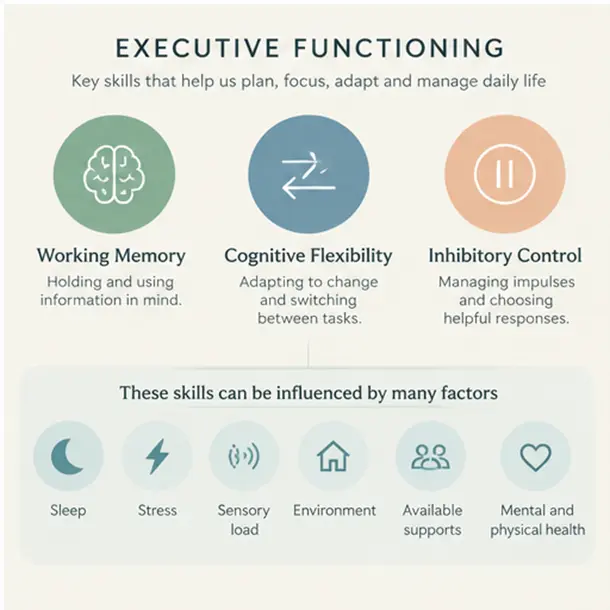
Executive functioning is an umbrella term for cognitive processes that help us organise and regulate goal-directed activity. These processes support planning, working memory, attention regulation, inhibition, cognitive flexibility, task initiation and monitoring what we are doing.
Executive functioning is not a measure of intelligence, motivation or worth. Access to these skills can vary across people, situations and stages of life.

Core executive functioning processes
Working memory
Working memory helps us hold and use information for a short period of time. Everyday examples include remembering the next step in a recipe, keeping track of what you wanted to say, or holding information in mind while completing a task.
When working memory demands are high, a person may lose track of steps, need information repeated, struggle to organise thoughts or become mentally fatigued.
Cognitive flexibility
Cognitive flexibility supports shifting attention, changing approach when circumstances change and considering another perspective or solution. Unexpected changes can require additional effort, particularly when someone is already stressed, overloaded or fatigued.
Inhibitory control
Inhibitory control contributes to pausing before acting, directing attention and reducing the pull of competing distractions. It can be harder to access when a person is tired, highly stressed, emotionally overwhelmed or in a demanding sensory environment.
What can executive functioning difficulties look like?
- delaying the start of a task even when it is important
- moving between tasks without completing them
- forgetting steps, intentions or information while doing something
- feeling overwhelmed by decisions or multi-step tasks
- finding unexpected changes difficult to manage
- having difficulty estimating time, prioritising or organising
- knowing what needs to be done but struggling to translate intention into action
These experiences are not specific to one diagnosis and should not be used by themselves to determine whether someone has ADHD, Autism or another condition.
What can affect executive functioning?
Executive functioning can fluctuate with context. Stress, burnout, sleep, physical health, emotional wellbeing, sensory load, pain, medication, environmental demands and available supports may all influence cognitive capacity.
ADHD and Autism
Executive functioning differences are common for many ADHD and autistic people, although each person’s profile is individual. Difficulties are not simply the result of laziness or insufficient effort. Environmental fit, sensory demands, task design and support can meaningfully affect how accessible executive functioning skills are.
Trauma and mental health
Anxiety, depression, trauma-related distress and other psychological concerns may also affect attention, memory, initiation, flexibility and regulation. Trauma and neurodevelopmental differences can coexist, and overlapping experiences need to be considered carefully rather than assuming one explanation.
Sleep and physical factors
Poor sleep, illness, pain, medication effects and neurological conditions can affect concentration, memory and regulation. New or significant cognitive changes may warrant discussion with an appropriate health professional.
Practical supports that may help
Reduce working memory demands
Use checklists, visual reminders, calendars, written instructions or a visible “next step” rather than expecting yourself to hold everything in mind.
Break tasks into smaller actions
A broad task such as “do the laundry” can be converted into concrete next steps, such as sorting clothes, starting the machine, setting a reminder and folding one category at a time.
Use external time supports
Visual timers, alarms and transition reminders may help make time more visible and support task initiation or switching.
Adapt the environment
Reducing distracting input, using headphones where appropriate, keeping commonly used items visible, or creating separate spaces for different activities may reduce cognitive load.
Use flexible structure
Some people benefit from routines that provide predictability without requiring every part of the day to happen exactly the same way.
Body doubling and accountability
Working alongside another person, in person or virtually, can help some people begin or sustain a task. The benefit varies between individuals.
Adjust demands during periods of reduced capacity
During burnout, illness, high stress or overload, temporarily prioritising essential tasks and reducing non-essential demands may be more realistic than expecting usual performance.
Supporting children and adolescents
Children and adolescents often rely on adults and environments to provide external executive functioning support. Expectations should be developmentally appropriate and adapted to the young person’s profile.
- visual schedules or step-by-step prompts
- external reminders and predictable cues
- preparing school or activity items in advance
- breaking routines or assignments into manageable steps
- offering limited choices when decision-making is overwhelming
- collaborating with the young person about what helps
- using encouragement and check-ins without framing difficulties as laziness or defiance
Support should aim to increase access and autonomy over time, rather than expecting a child to manage demands that exceed their current developmental or executive functioning capacity.
A neuro-affirming and trauma-informed perspective
A neuro-affirming approach asks what supports, environments and task structures help a person’s brain work more effectively. A trauma-informed approach also considers emotional safety, stress load and whether particular demands or situations are contributing to shutdown, avoidance or overwhelm.
Neither approach assumes that every executive functioning difficulty has the same cause. Understanding the pattern, context and individual needs is more useful than relying on a single strategy.
When might professional support be useful?
Consider speaking with a psychologist, GP or another appropriately qualified professional if executive functioning difficulties are persistent, represent a significant change, or are affecting wellbeing, learning, work, relationships or everyday functioning.
At Blossom Psychology Clinic, psychologists can support executive functioning within broader psychological therapy and, where appropriate, discuss whether ADHD, Autism or combined assessment may be relevant.
This article provides general information and is not a substitute for individual psychological or medical advice.
Related Reading and Services
If executive functioning difficulties are significantly affecting everyday life, psychological support can help explore the broader pattern, practical supports and whether further assessment may be relevant.